
All results are from certified labs with known methodologies.
Qualifying a new supplier is fundamentally a documentation process. This page details exactly what we test, who tests it, the limits we measure against, and how we handle import compliance so it does not land on you.
Tested on every grain, individually
Our facility has never processed wheat, dairy, nuts, soy or egg. The allergen results below are a confirmation of that isolation, not the outcome of a changeover cleaning programme.
Each flour is tested separately from its own production lot by accredited third-party laboratories.
| Gluten | Not detected · LOQ 2 mg/kg |
|---|---|
| Wheat | Not detected · LOQ 2 mg/kg |
| Milk | Not detected · LOQ 0.4 mg/kg |
| Peanut | Not detected · LOQ 1 mg/kg |
| Soybean | Not detected · LOQ 40 µg/kg |
For context: the FDA threshold for a gluten-free claim is 20 ppm and certification programmes commonly require 10. Not detected below 2 is an order of magnitude clear of both.
Heavy metals, mycotoxins and pesticides
We screen every lot of every grain. Across all three flours our accredited laboratories consistently confirm results safely below regulatory limits.
| Aflatoxin B1 | < 2.0 µg/kg · limit 10 |
|---|---|
| Total aflatoxins | < 2.0 µg/kg · limit 15 |
| Arsenic, total | < 0.01 mg/kg · limit 1.1 |
| Lead | < 0.01 mg/kg (ragi 0.05) · limit 0.2 |
| Cadmium | < 0.01 mg/kg (ragi, bajra 0.01) · limit 0.1 |
| Mercury | < 0.01 mg/kg · limit 1.0 |
| Methyl mercury | < 0.01 mg/kg · limit 0.25 |
| Copper | 1.72 – 5.31 mg/kg · limit 30 |
| Tin | < 0.01 mg/kg · limit 250 |
| Uric acid | < 1.0 mg/kg · limit 100 |
| Sulphite as SO₂ | < 10 mg/kg · limit 200 |
| Pesticide residues | 17 analytes, all < 0.01 mg/kg |
| Glyphosate | Below LOQ 0.01 mg/kg |
| Fumonisin B1 + B2 | Below LOQ 1.0 µg/kg |
| Ochratoxin A | Below LOQ |
| Hydrocyanic acid | < 2.7 mg/kg |
A proven 12-month shelf life.
Sprouted flours, particularly pearl millet with its naturally higher fat content of 5.49 %, require strict lipid stability. To confirm our flours do not go rancid, we ran accelerated shelf-life studies on all three grains at 38 °C and 90 % relative humidity in sealed laminated pouch.
All three grains proved microbiologically and chemically stable, concluding a shelf life of 12 months from the date of manufacture.
| Total viable count | 5.1×10² – 5.6×10³ cfu/g · limit 10⁶ |
|---|---|
| Coliforms | < 10 cfu/g · limit 10² |
| E. coli, Salmonella, S. aureus | Absent |
| Yeast | < 10 cfu/g |
| Mould | < 10 – 8.0×10¹ cfu/g · limit 10⁴ |
| Alcoholic acidity, start to end | 0.13 → 0.14 · 0.18 → 0.19 · 0.19 → 0.20 |
| Organoleptic (colour, odour, texture) | 5 of 5 at twelve months |
What the studies did not cover. Our initial studies did not evaluate peroxide value or free fatty acids. To give your QA team complete visibility into lipid oxidation, we are adding both metrics to our upcoming testing round.
Recommended storage. To achieve the full 12-month shelf life, store in a cool, dry, pest-free environment away from direct sunlight and strong odours.
Alcoholic acidity is the marker for lipid degradation. Across a full accelerated year it moved by 0.01 in every grain. Combined with water activity of 0.672 to 0.688 – below the 0.7 threshold at which mould and bacteria can grow – that is the substance behind the shelf life rather than a number on its own.
A single-category plant
Our facility in Telangana processes millets and sorghum, and absolutely nothing else. We do not schedule around allergens, and we do not rely on cleaning validations to prevent cross-contact.
Because this is our own plant, not a contract mill or a broker relationship, we enforce the operational controls below directly.
- FSSAI-certified facility
- Millets and sorghum only, since inception
- Rodent- and pest-free environment under documented hygiene protocols
- Soaking and germination in precision-controlled clean rooms
- Epoxy-coated flooring, automated doors, regulated air
- Process water RO and UV treated
- Grain stored under CO2, not chemical fumigation
- No hand contact with product from cleaning onward
- Batch testing by NABL-accredited laboratories
Process water
Because grain soaks in water for hours during germination, water quality is critical. Our process water is RO and UV treated and tested to strict drinking water standards across 61 parameters, with E. coli and total coliform bacteria absent.
Our own laboratory
We run an in-house laboratory for routine quality control and in-process monitoring, which is what lets us catch a problem during a run rather than weeks later. Nutritional, contaminant, allergen and other specialist analyses are performed by accredited external laboratories, because those are the results that belong in your specification.
The in-house laboratory is currently awaiting accreditation, expected in October. Until then we do not present its results in place of accredited third-party work.
If you need a specific parameter checked on a specific lot, tell us and we will confirm whether we can run it here or whether it goes to the accredited laboratory, and how long each route takes.
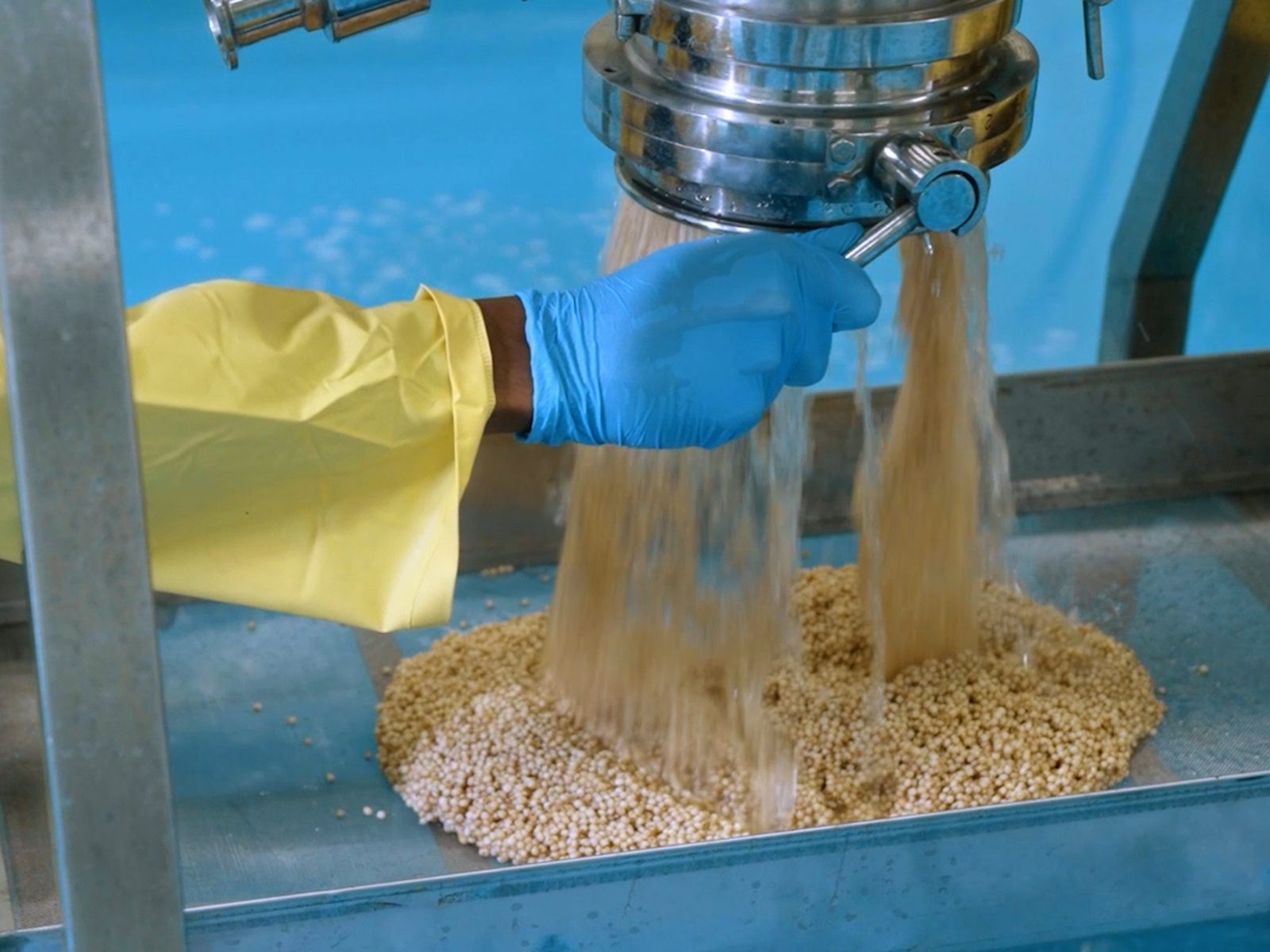
Destoner, with equipment identification.
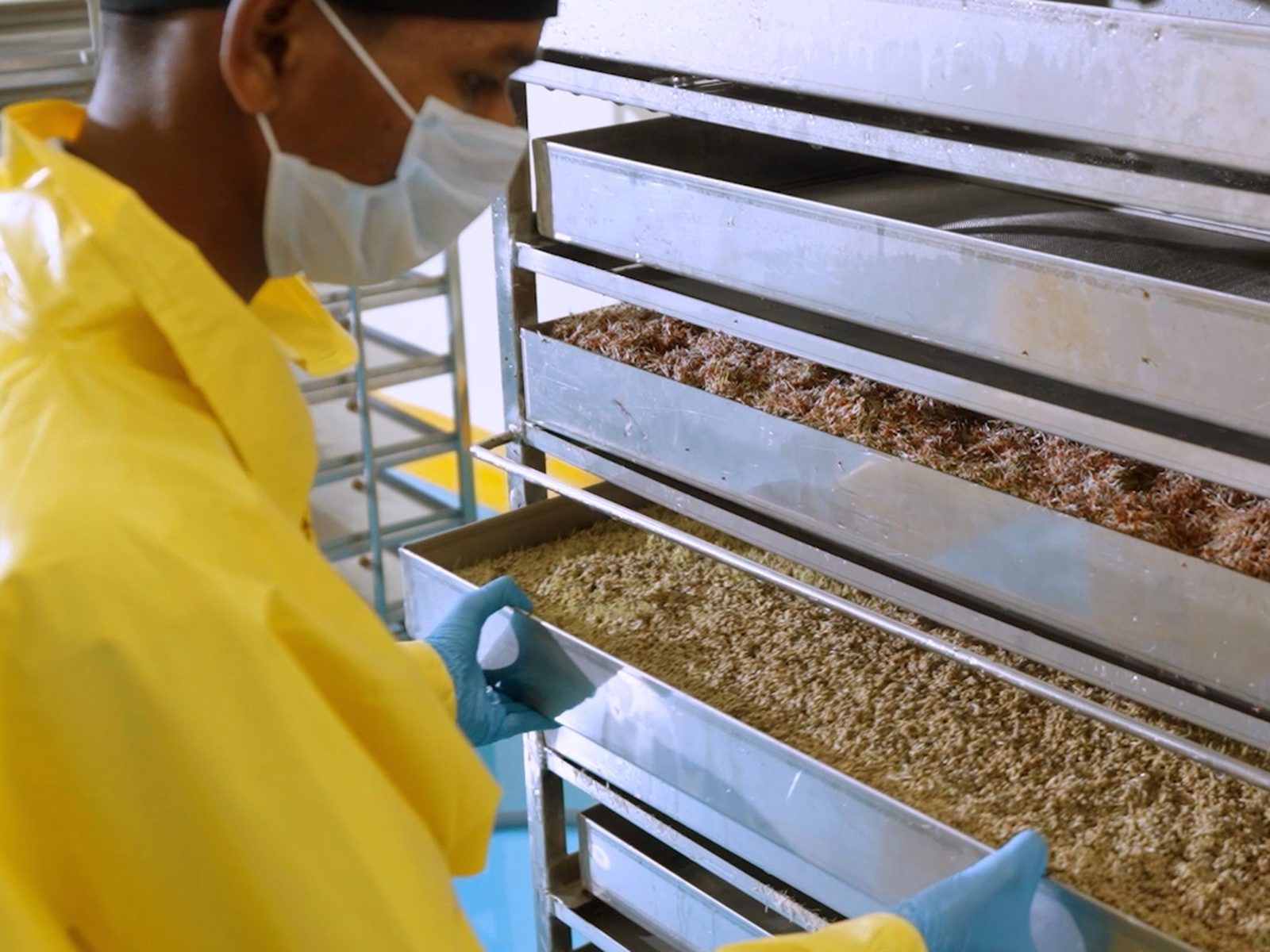
Controlled humidity, airflow and duration.
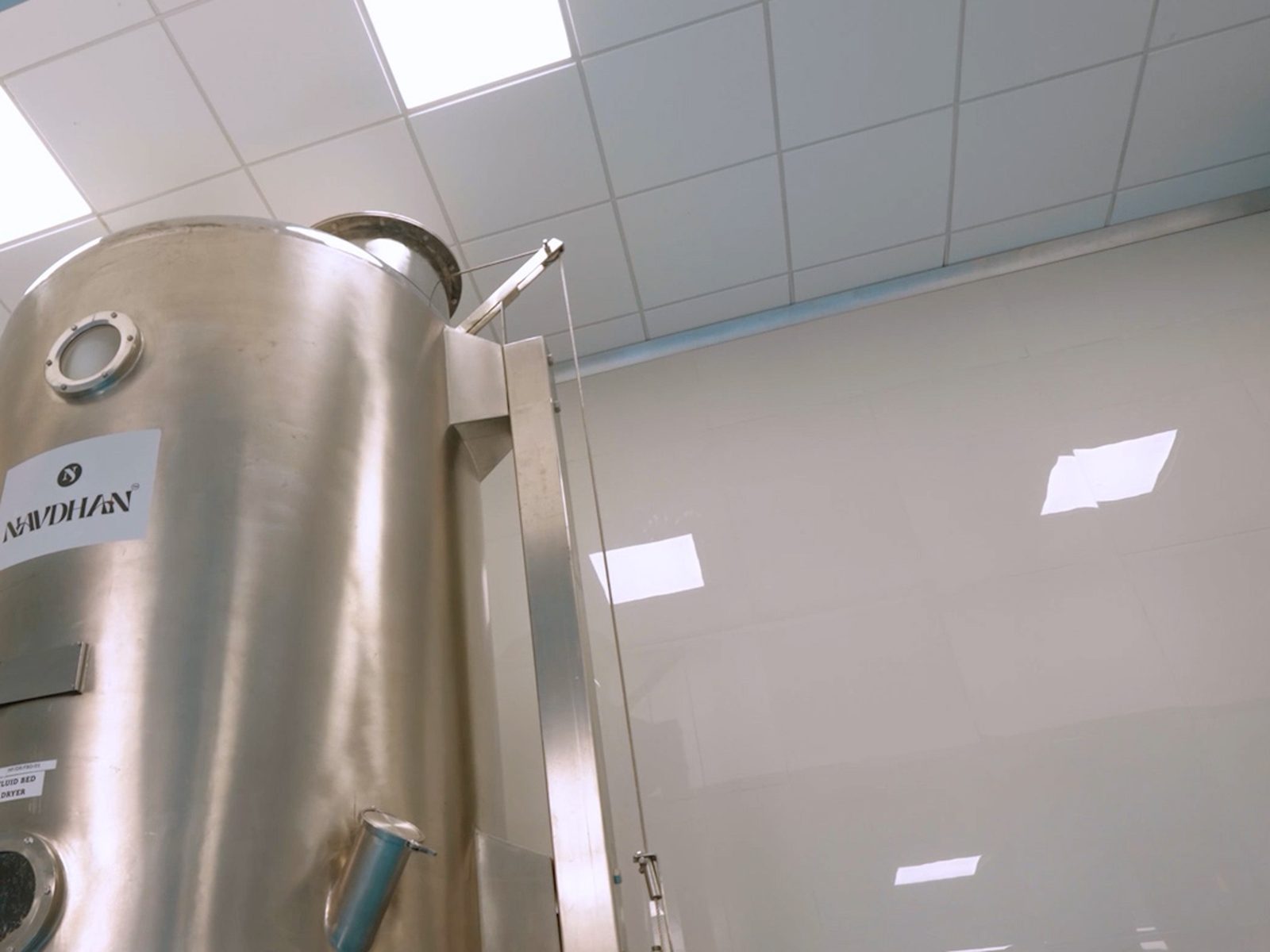
Centrifuge rinsing, hot air drying, milling.
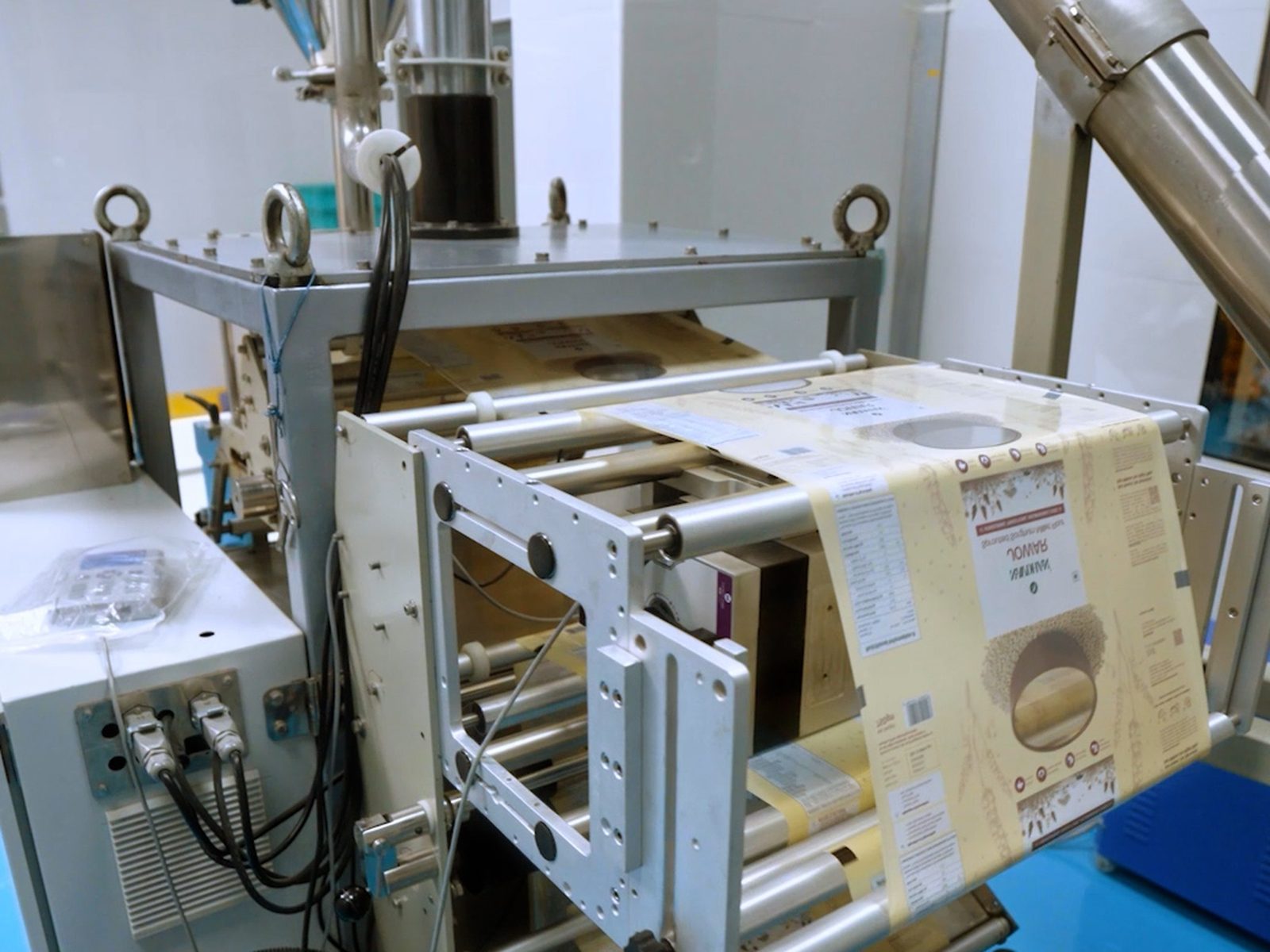
Sub-kilogram pouches to multi-kilo bulk.
Filmed at our Dandumalkapur facility. If your qualification process needs footage of a specific area or process step, ask and we will arrange it.
Environment and ESG metrics
Sprouting is water-intensive. We use controlled steeping cycles, on-site biological wastewater treatment with treated water reused rather than discharged, and CO2 grain storage instead of chemical fumigation. Sourcing is single-origin from Telangana, so the supply chain is short and traceable.
If your own reporting needs specific figures – water per tonne, energy per tonne, waste diverted – tell us which metrics your framework uses and we will confirm what we can measure and what we cannot. We would rather give you four numbers we can stand behind than a page of commitments.
USDA Organic, NOP
Our sprouted flours are available as conventional supply, and organic supply can be produced to order. Organic runs are strictly separated from conventional runs via a documented line purge, recorded against the batch, and organic lots are traceable to certified farms rather than open-market procurement.
| Standard | USDA National Organic Program, 7 CFR Part 205 |
|---|---|
| Certification | Arranged against a confirmed order |
| Certifier | USDA-recognised, identified |
| Scope | Sprouted finger millet, sorghum and pearl millet flour |
Certificates are supplied with each shipment and are available in advance for your approved-supplier file.
Available on request
- Certificate of analysis, per lot, with lot number stated
- Allergen panel – gluten, wheat, milk, peanut, soy
- Heavy metals, mycotoxins and 17-analyte pesticide screen
- Accelerated shelf life study, per grain
- Process water analysis to IS 10500
- Technical data sheet In preparation
- US nutrition panel, AOAC dietary fibre In progress
- Blend gluten testing, as distinct from single flours Next lot
- Phytic acid, paired raw and sprouted In progress
- USDA Organic certificate, NOP In progress
Samples ship at our cost for evaluation. Laboratory reports are shared under their issuing terms; tell us what your qualification file needs and we will confirm what we can release.
Who carries what
When you buy from us, your legal counterparty is HETC USA, Inc. We act as the importer of record.
The practical consequence for your purchasing team is that you are buying domestically from a US corporation rather than importing. Foreign Supplier Verification Program obligations, prior notice, customs entry and supplier verification records sit with us.